
MATHEMATICS FOR ROBOT
- Vectors and matrices
- Matrix multiplication
- Coordinate systems
- Trigonometry
- Derivatives and basic calculus
- Statistics
- Practice: calculate robot position from coordinate transformations.
*PRACTICE MATHS QUESTION AND ANSWER ROBOTICS
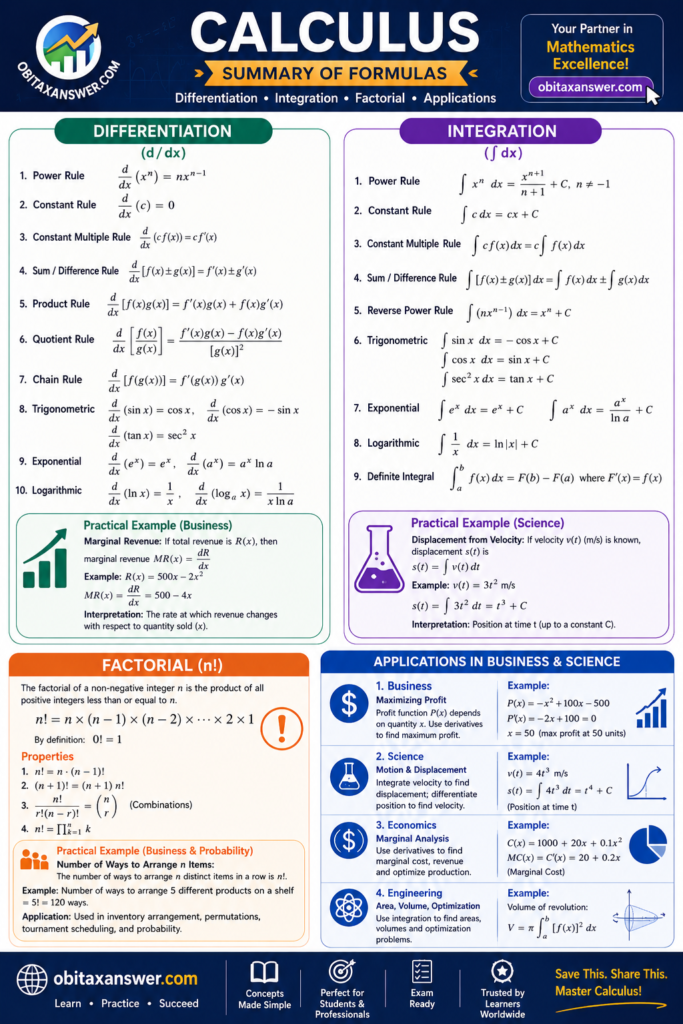
Practical Mathematics for AI and Robotics: Questions and Answers
Mathematics is one of the foundations of AI, robotics, computer vision, autonomous vehicles, drones, and machine learning. The important thing is not only knowing formulas, but understanding what the mathematics is doing inside a real system.
Below is a practical question-and-answer guide covering:
- Vectors
- Matrices
- Matrix multiplication
- Coordinate systems
- Trigonometry
- Derivatives and basic calculus
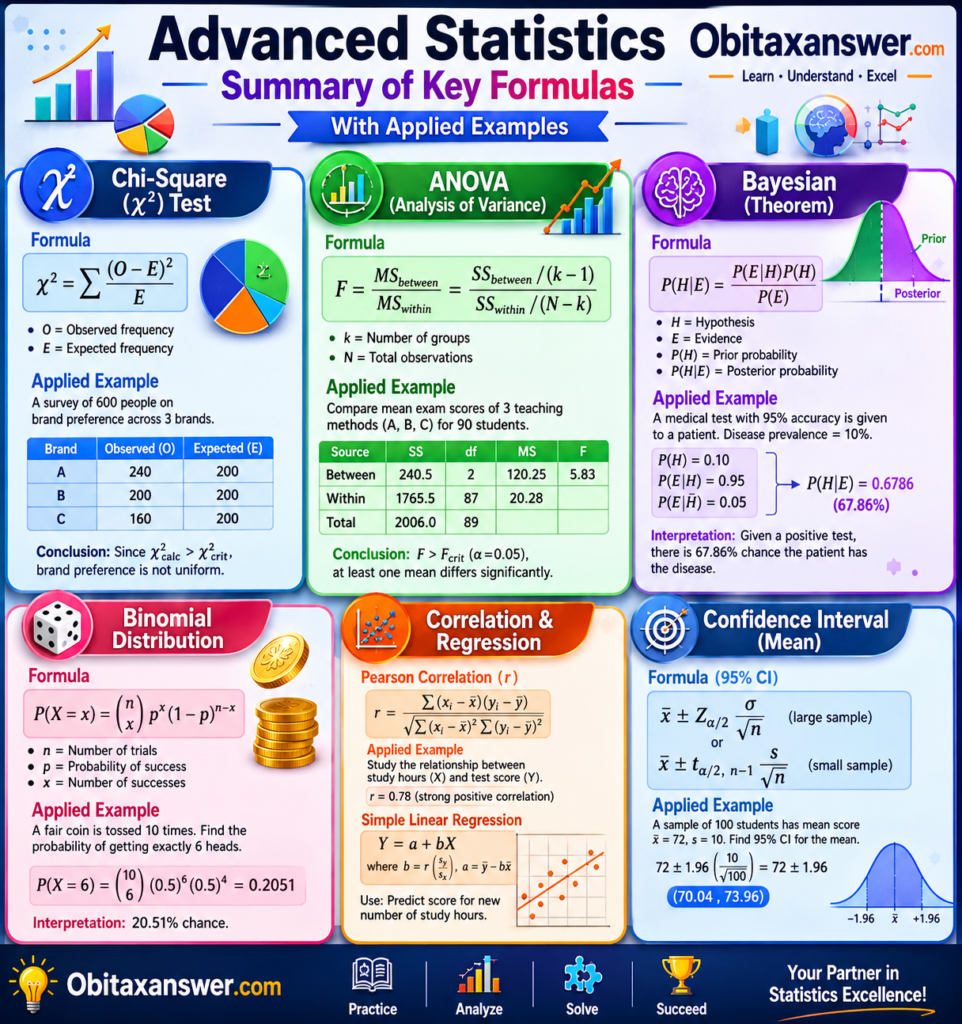
- Statistics
- How they work together in an AI/robotics system
1. VECTORS
Q1. What is a vector?
A vector is a mathematical object that contains magnitude and direction.
For example:
This could represent a robot moving:
- 3 metres in the X direction
- 4 metres in the Y direction
The vector’s magnitude is:
So the robot’s movement is 5 metres in total.
AI/robotics application
A robot might represent its velocity as:
meaning:
- 2 m/s horizontally
- 1 m/s vertically
The robot can use this information to predict where it will be a short time later.
Q2. Why are vectors important in AI?
AI systems frequently deal with many quantities simultaneously.
For example, an image might be represented by thousands or millions of numerical values.
A simplified image could be:
A neural network processes these numbers as vectors.
Similarly, an AI model might represent a person’s characteristics as:
The vector provides a mathematical representation of the object.
2. VECTOR ADDITION
Q3. How does vector addition work?
Suppose a robot moves:
and then:
The total movement is:
Therefore:
Robotics application
This can represent combining:
- robot movement
- movement caused by a rotating arm
- movement caused by a conveyor belt
The resulting vector tells us the combined displacement.
3. VECTOR SUBTRACTION
Q4. How can a robot calculate the direction to another object?
Suppose the robot is at:
and the target is:
The direction from the robot to the target is:
Therefore:
The robot needs to move in the direction:
This basic calculation appears throughout:
- robot navigation
- autonomous vehicles
- drone navigation
- game AI
- computer vision
4. DOT PRODUCT
Q5. What is the dot product?
The dot product combines two vectors into a single number.
For:
and:
we calculate:
Q6. Why is the dot product important in AI?
The dot product is fundamental to neural networks.
Suppose we have:
and weights:
The neural network calculates:
Then the neural network may apply an activation function.
So the basic operation inside many neural-network layers is essentially:
multiply numbers and add them together.
5. MATRICES
Q7. What is a matrix?
A matrix is a rectangular arrangement of numbers.
For example:
This is a 2 × 2 matrix.
Matrices are extremely important because they allow computers to perform many calculations simultaneously.
Q8. Where are matrices used in AI?
Matrices are everywhere in machine learning.
For example, a neural network might have:
This could represent the weights connecting one neural-network layer to another.
A computer can process thousands or millions of these numbers using highly optimized matrix operations.
This is one reason GPUs are so important for AI.
6. MATRIX MULTIPLICATION
Q9. How does matrix multiplication work?
Consider:
and:
Then:
Therefore:
Q10. Why is matrix multiplication so important in AI?
A simplified neural-network calculation looks like:
where:
- = input data
- = weights
- = bias
- = output
For example, imagine an AI receives three measurements:
The neural network has a matrix of weights:
Then:
produces two outputs.
This is essentially what happens repeatedly through layers of a neural network.
7. COORDINATE SYSTEMS
Q11. What is a coordinate system?
A coordinate system gives us a way to describe where something is.
In 2D:
In 3D:
For example:
means:
- X = 4
- Y = 2
- Z = 3
8. ROBOT COORDINATE SYSTEMS
Q12. Why does a robot need coordinate systems?
Imagine a robotic arm.
It needs to know:
Where is my hand relative to my body?
and:
Where is the object I need to pick up?
You could have several coordinate systems:
World coordinates
Robot coordinates
Camera coordinates
The robot needs mathematics to convert between them.
9. TRANSFORMATIONS
Q13. What happens when a robot changes position?
Suppose a camera sees an object at:
But the robot’s coordinate system is shifted by:
The object’s new position may be calculated as:
Therefore:
This concept becomes much more powerful when rotation is added.
10. TRIGONOMETRY
Q14. Why does robotics need trigonometry?
Robots have moving parts.
If a robotic arm rotates by an angle , we need to calculate where the end of the arm will be.
Suppose an arm has length:
and rotates through:
Then:
and:
Therefore:
and:
So the end of the robot arm is approximately:
11. ROBOT ARM EXAMPLE
Q15. How can trigonometry calculate the position of a robotic arm?
Suppose a robot has two arm segments.
First arm:
Second arm:
Their angles are:
The final position can be calculated using trigonometry.
For a simplified planar robot:
This is called forward kinematics.
The robot uses the joint angles to calculate where its hand is.
12. INVERSE KINEMATICS
Q16. What is inverse kinematics?
Forward kinematics asks:
If I know the joint angles, where is my robot hand?
Inverse kinematics asks:
If I know where I want the robot hand to be, what joint angles do I need?
For example:
Put the robot hand at
(8, 5).
The computer must calculate:
that place the hand there.
This is a major application of:
- vectors
- matrices
- trigonometry
- geometry
- calculus
- numerical optimization
13. DERIVATIVES
Q17. What is a derivative?
A derivative describes how quickly something changes.
For example:
The derivative is:
At:
the derivative is:
So at , the function is changing at a rate of 6.
14. DERIVATIVES IN ROBOTICS
Q18. How does a derivative relate to robot movement?
Suppose:
describes a robot’s position over time.
Velocity is:
Acceleration is:
or:
Therefore:
Position → derivative → velocity → derivative → acceleration
This is fundamental to robot motion control.
15. DERIVATIVES IN AI
Q19. Why are derivatives so important to machine learning?
Suppose an AI model makes predictions.
We want to know:
How should I change the model’s weights to make the prediction better?
The derivative tells us how the error changes when a weight changes.
Suppose:
The model calculates the loss.
Then derivatives tell us which direction to change the model parameters.
This leads to gradient descent.
16. GRADIENT DESCENT
Q20. What is gradient descent?
Imagine standing on a mountain and wanting to reach the lowest point.
You look at the slope.
Then take a small step downhill.
Repeat.
That is essentially the idea behind gradient descent.
Mathematically:
where:
- = model weight
- = loss
- = learning rate
- = derivative of loss with respect to the weight
17. SIMPLE AI EXAMPLE
Q21. Suppose an AI predicts 8 but the correct answer is 10. What happens?
Prediction:
Target:
Error:
If we use squared error:
The AI now has a numerical measure of how wrong it was.
The derivative tells the learning algorithm how to adjust the relevant parameters.
After many examples, the model gradually learns parameters that reduce the loss.
18. STATISTICS
Q22. Why does AI need statistics?
AI deals with uncertainty.
For example, a camera might see something and ask:
Is this a car?
It might produce:
Statistics and probability allow AI to reason about uncertain information.
19. MEAN
Q23. What is the mean?
Suppose a robot records temperatures:
The mean is:
The average temperature is:
20. MEDIAN
Q24. What is the median?
For:
the median is:
The mean is strongly affected by the 100.
The median is more resistant to extreme values.
This matters when AI systems process noisy sensor data.
21. VARIANCE
Q25. What is variance?
Variance tells us how spread out data is.
If a robot’s sensor repeatedly measures:
the measurements are tightly grouped.
If it measures:
the measurements are much more variable.
Variance gives us a mathematical way of measuring that spread.
22. STANDARD DEVIATION
Q26. What is standard deviation?
Standard deviation is the square root of variance.
A small standard deviation means measurements tend to stay close to the average.
A large standard deviation means measurements are more spread out.
Robotics example
Suppose a distance sensor reports:
The robot can estimate how reliable its sensor is.
23. PROBABILITY
Q27. How does probability help a robot?
Imagine a robot’s camera detects an object.
The AI might calculate:
The robot can then decide:
There is an 80% probability that the object is a person.
This can influence its behaviour.
For example:
- slow down
- stop
- change direction
- request additional sensor information
24. SENSOR FUSION
Q28. How do statistics and vectors work together in robotics?
Suppose a robot has:
- camera
- GPS
- lidar
- wheel encoder
Each sensor provides imperfect information.
For example:
GPS says:
Camera estimates:
Lidar estimates:
The robot can combine these estimates statistically to obtain a better estimate of its position.
This is called sensor fusion.
More sophisticated systems use techniques such as:
- Kalman filters
- Bayesian estimation
- particle filters
25. MATRICES AND ROBOT ROTATION
Q29. How can matrices represent rotation?
A 2D rotation can be represented by:
Suppose:
Then:
If:
then:
giving:
The point has been rotated 90°.
26. HOMOGENEOUS TRANSFORMATIONS
Q30. How does a robot combine rotation and translation?
Robotics often uses a 4 × 4 transformation matrix:
The upper-left 3 × 3 section represents rotation.
The final column represents translation.
This allows a robot to express:
Rotate this object and then move it to this position.
This is fundamental in:
- robotic arms
- autonomous vehicles
- drones
- computer graphics
- computer vision
- 3D simulation
27. HOW ALL THE MATHEMATICS WORK TOGETHER
Q31. Can we follow one complete robotics example?
Yes.
Imagine a warehouse robot.
It needs to pick up a box.
Step 1 — Sensors
The camera detects the box.
The AI processes image data represented as numerical arrays.
Matrices and vectors are used.
Step 2 — Object detection
The neural network calculates:
This uses probability/statistics.
Step 3 — Determine location
The camera estimates:
The robot must convert this from camera coordinates into robot coordinates.
Coordinate transformations and matrices are used.
Step 4 — Calculate robot arm movement
The robot needs to move its arm toward the box.
Vectors and trigonometry are used.
Step 5 — Calculate joint angles
The robot determines:
using inverse kinematics.
Trigonometry, geometry, vectors and matrices are used.
Step 6 — Control movement
The robot monitors its position:
and calculates:
and:
Calculus is used.
Step 7 — Correct errors
Suppose the robot is 2 cm away from the desired position.
The controller calculates the error and adjusts motor commands.
Vectors, derivatives and control mathematics are used.
Step 8 — Deal with sensor uncertainty
The camera, lidar and encoders don’t give exactly the same measurements.
The robot estimates the most likely position.
Statistics and probability are used.
28. THE MATHEMATICS STACK
A useful way to understand AI and robotics mathematics is:
                 AI & ROBOTICS
                       │
          ┌────────────┴────────────┐
          │                         │
       AI / ML                   ROBOTICS
          │                         │
    ┌─────┴─────┐             ┌─────┴──────┐
    │           │             │            │
 Vectors     Matrices      Geometry    Coordinates
    │           │             │            │
    └─────┬─────┘             └─────┬──────┘
          │                         │
          └──────────┬──────────────┘
                     │
               Trigonometry
                     │
                 Calculus
                     │
              Optimization
                     │
                Statistics
                     │
                Probability
29. WHAT YOU SHOULD LEARN FIRST
Q32. If I want to learn AI and robotics, what mathematical order should I follow?
A practical sequence is:
- Basic algebra
- Vectors
- Matrices
- Matrix multiplication
- Coordinate geometry
- Trigonometry
- Derivatives
- Basic calculus
- Probability
- Statistics
- Optimization
- Linear algebra
- Numerical methods
You do not need to master every mathematical theorem before beginning AI or robotics.
The better approach is:
Learn the mathematics and immediately apply it to a small AI/robotics problem.
30. PRACTICAL PROJECT TO CONNECT EVERYTHING
A very good beginner project would be a 2D robot simulator.
Create a robot on a 2D screen.
Give it:
- position
(x,y) - heading angle
θ - speed
- target position
- simulated sensor noise
Then make it:
- Calculate the vector from robot to target.
- Calculate the distance.
- Calculate the angle to the target using
atan2. - Rotate toward the target using trigonometry.
- Move using vectors.
- Add random sensor noise.
- Use statistics to estimate the robot’s position.
- Calculate the error between actual and desired position.
- Use derivatives to control movement smoothly.
- Eventually implement a PID controller.
That one project can teach you vectors, matrices, coordinates, trigonometry, calculus, statistics, AI concepts and robotics control in a connected way.
The key idea
You don’t need to think of these as separate subjects:
They are different mathematical tools for answering different questions:
- Vector: Where and in what direction?
- Matrix: How do I transform/process many values?
- Coordinates: Where is the object?
- Trigonometry: What happens when something rotates?
- Derivative: How fast is it changing?
- Statistics: How uncertain/noisy is the measurement?
- Probability: What is most likely?
- Optimization: What parameters should I change to get the best result?
This is the practical mathematical foundation underneath a large part of modern AI, computer vision, robotics, autonomous vehicles, drones and machine learning.
START COURSE
INTRODUCTION TO ROBOTICS: 16USD/20,000NGN
ADVANCE ROBOTICS , PRACTICAL AND SIMULATION: 400USD/580,000NGN
FOR MORE INFORMATION +2348067922530(WHATSAPP),
azu@obitaxanswer.com